
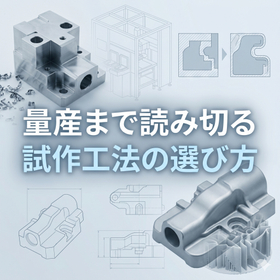
Choosing Prototyping Methods with an Eye on Mass Production for the Semiconductor Industry
Prototyping involves cutting, while mass production uses casting? Considering manufacturing methods from the early stages of development enables total cost reduction and a smooth launch.
In the development of semiconductor manufacturing equipment, the speed of prototyping is prioritized. However, if prototyping is carried out solely through machining, it faces challenges during mass production, such as "costs not decreasing" and "high material waste," leading to significant setbacks. The essential issue is whether "near-net shape (forming close to the final shape)" is considered at the initial stages of mass production. ■ Points for Casting - Short lead-time prototyping: By utilizing 3D printers for molds, rapid prototyping can be achieved in as little as 5 to 10 days without the need for mold creation. - Cost optimization: Casting reduces machining labor and material waste, thereby lowering total costs. - Integration: By leveraging the free-forming capabilities of castings, multiple parts can be integrated, reducing manufacturing costs and lead times. Choosing the optimal method from the beginning based on production quantities and functional requirements is the shortest route to development. The Hinode Group provides total support for your development, from material proposals to prototyping and integrated production.
- Company:日之出水道機器 産業機械マーケティング
- Price:Other
